Is Your Business Ready for the EU AI Act?
Full enforcement begins August 2, 2026. Fines up to EUR 35M or 7% of global revenue. Find out where you stand.
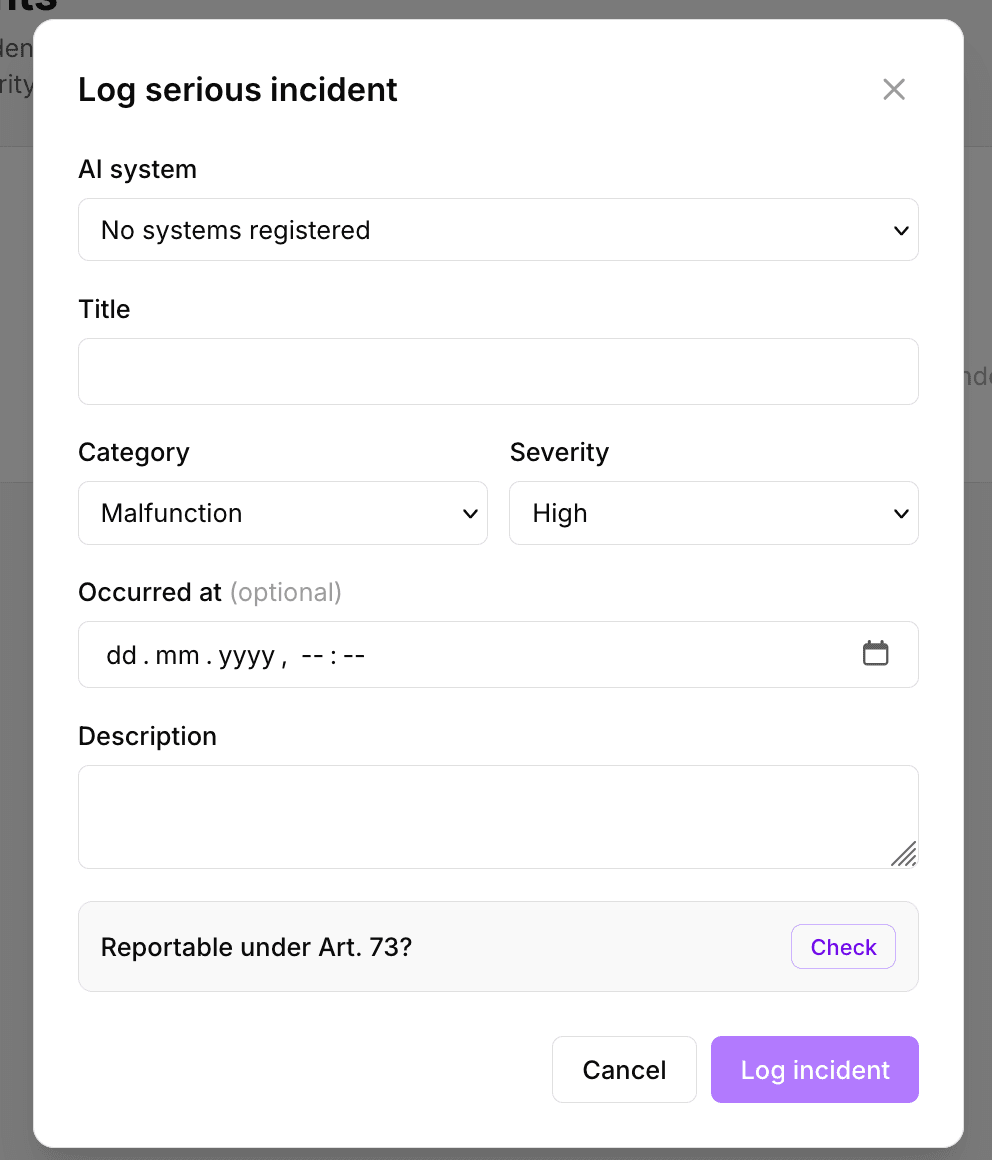
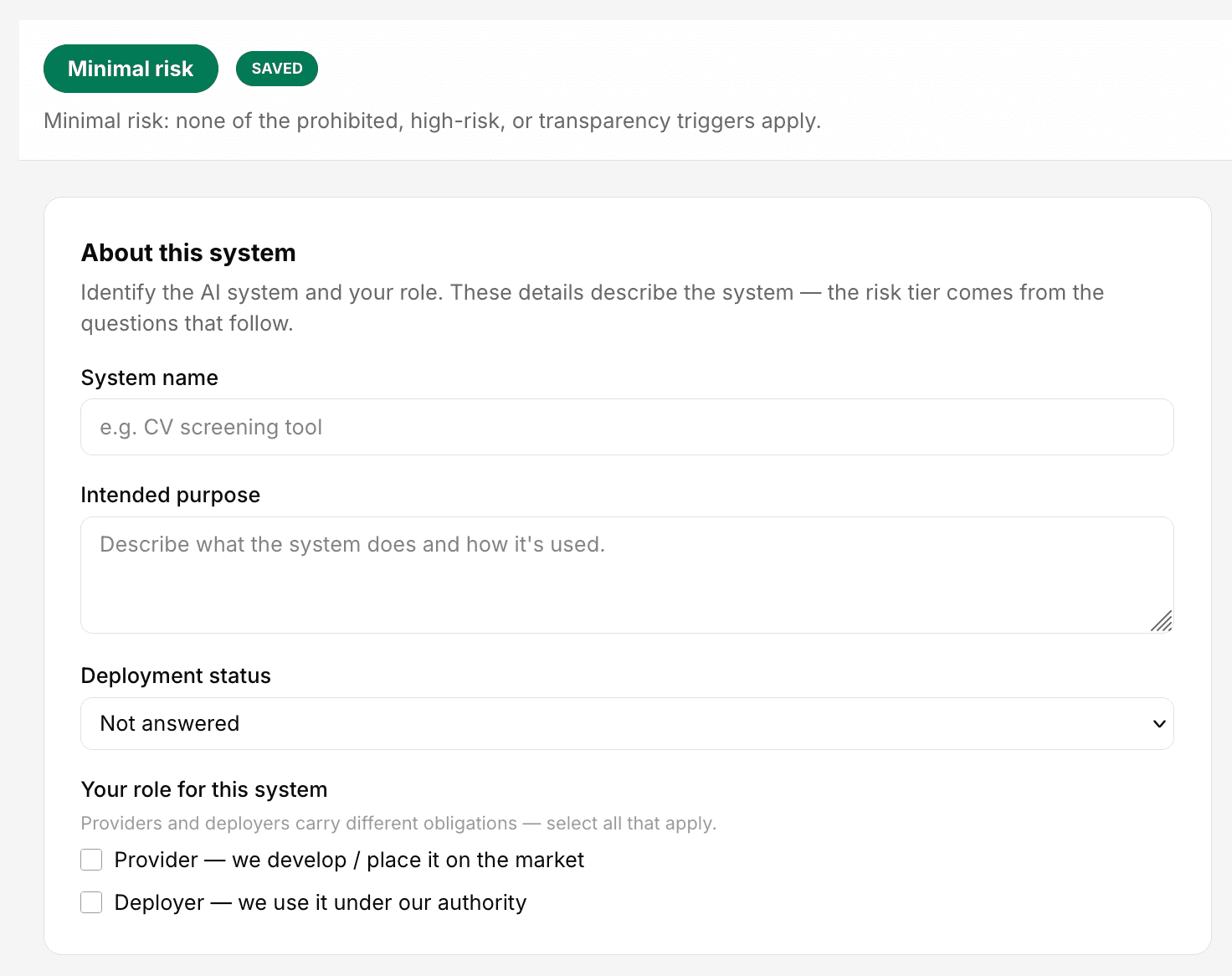
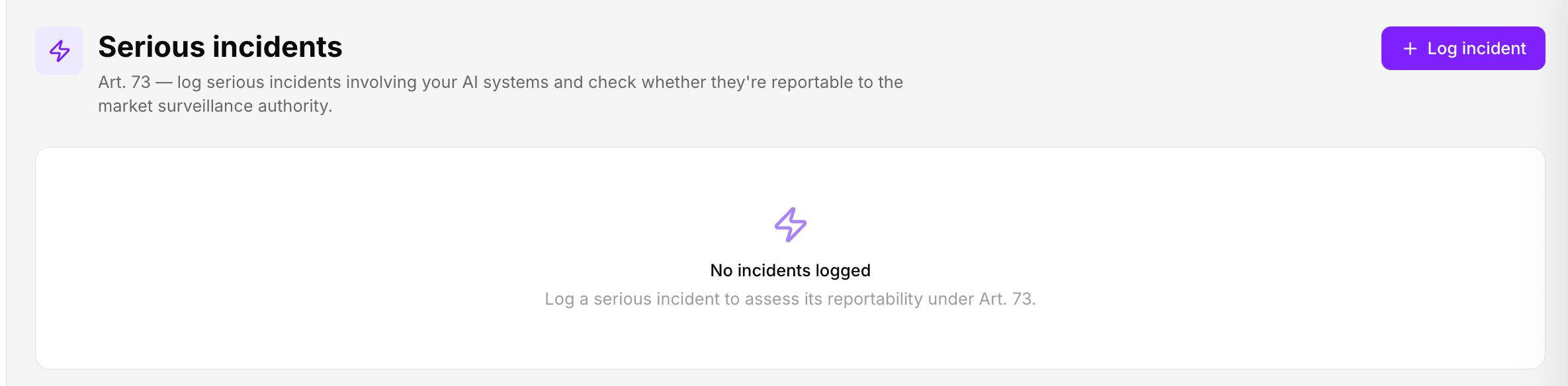
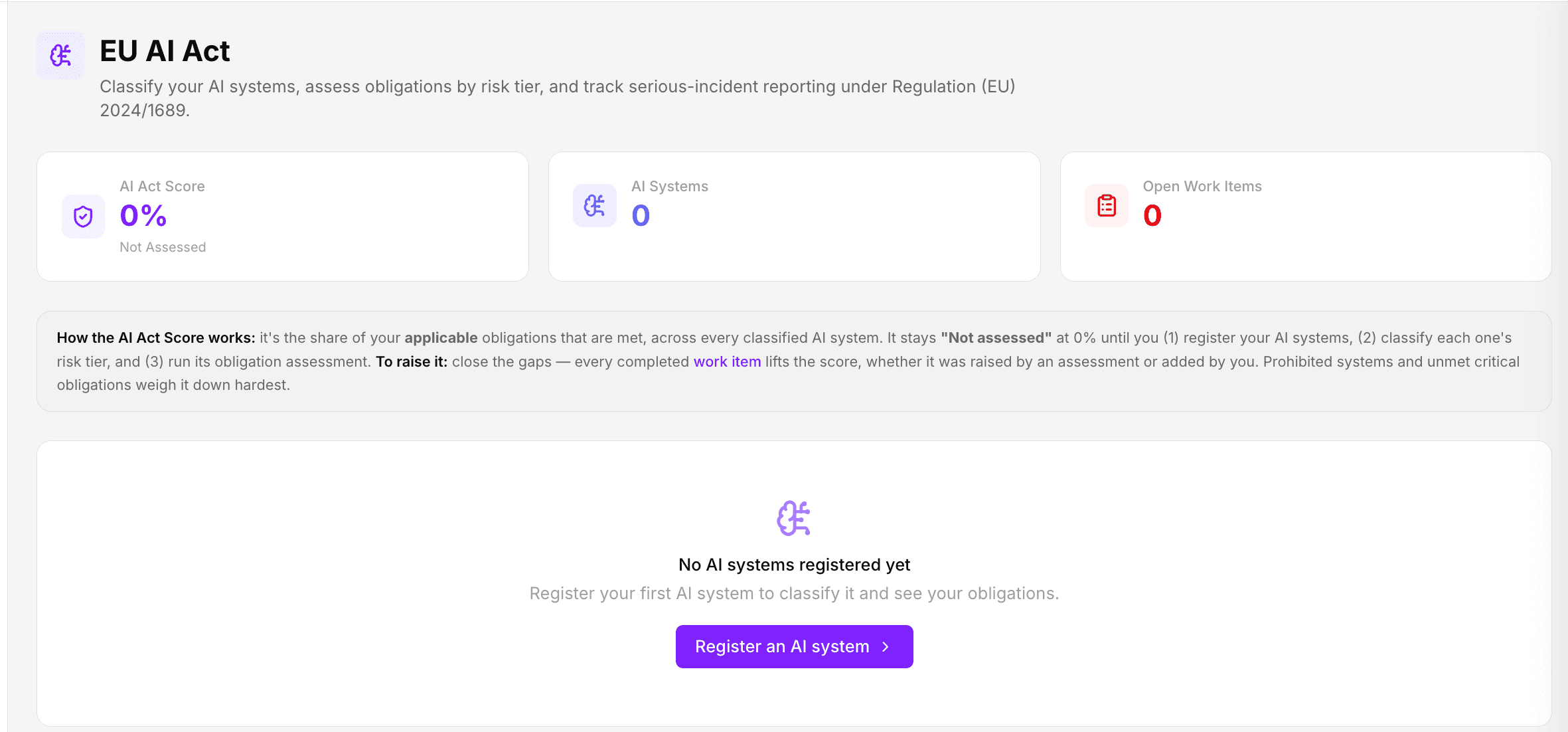
What the AI Act Means for Your Business
Prohibited AI Practices
Certain AI uses are banned outright: social scoring, real-time biometric surveillance, manipulative AI. If you use any of these, you must stop.
High-Risk AI Systems
AI used in hiring, credit scoring, education, law enforcement, and critical infrastructure must meet strict requirements: risk assessments, documentation, human oversight.
General Purpose AI
If you deploy or develop general-purpose AI models (including using tools like ChatGPT or Copilot in business processes), you have transparency and documentation obligations.
Not sure which category your AI falls into? That's exactly what we check.
Who Needs to Comply
You need to comply with the EU AI Act if:
- You develop AI or machine learning systems
- You deploy AI in business decision-making
- You use third-party AI tools (ChatGPT, Copilot, Midjourney, etc.)
- You operate in the EU or serve EU customers
If you checked any of these, the AI Act applies to you.
Penalties
EUR 35M
or 7% of global turnover
Prohibited AI violations. The EU's most severe tech penalty.
EUR 15M
or 3% of global turnover
Non-compliance with high-risk or transparency requirements.
The EU has already begun enforcement preparations. Waiting is not a strategy.
See where you stand on the AI Act
Create a free account and check your AI Act compliance in 5 minutes.
Start Your Free CheckAI Act FAQ
When does the AI Act take full effect?
The EU AI Act enters full enforcement on August 2, 2026 for high-risk AI systems. Prohibited practices are already banned as of February 2, 2025. General-purpose AI model obligations apply from August 2, 2025.
Does the AI Act apply if my company is outside the EU?
Yes, if your AI system is used in the EU or its outputs affect people in the EU. The AI Act has extraterritorial reach, similar to GDPR.
We just use ChatGPT internally — does the AI Act apply?
Potentially. If you use general-purpose AI tools in business processes that affect decisions about people (hiring, customer service, content generation for EU audiences), you may have transparency and documentation obligations.
What should we be doing right now?
Start with a compliance check to understand your obligations. Then inventory your AI systems, classify them by risk level, and begin documentation. The earlier you start, the more time you have to address gaps before enforcement.