Accounting, ERP and bookkeeping compliance
Your clients' financial data is personal data. Treat it that way.
Vendor records, client invoices and banking integrations create GDPR, FADP and CSRD obligations most accounting firms have no structured process for. ComplyOne fixes that — one platform, every applicable regulation.
Just 5 quick questions — no credit card required.
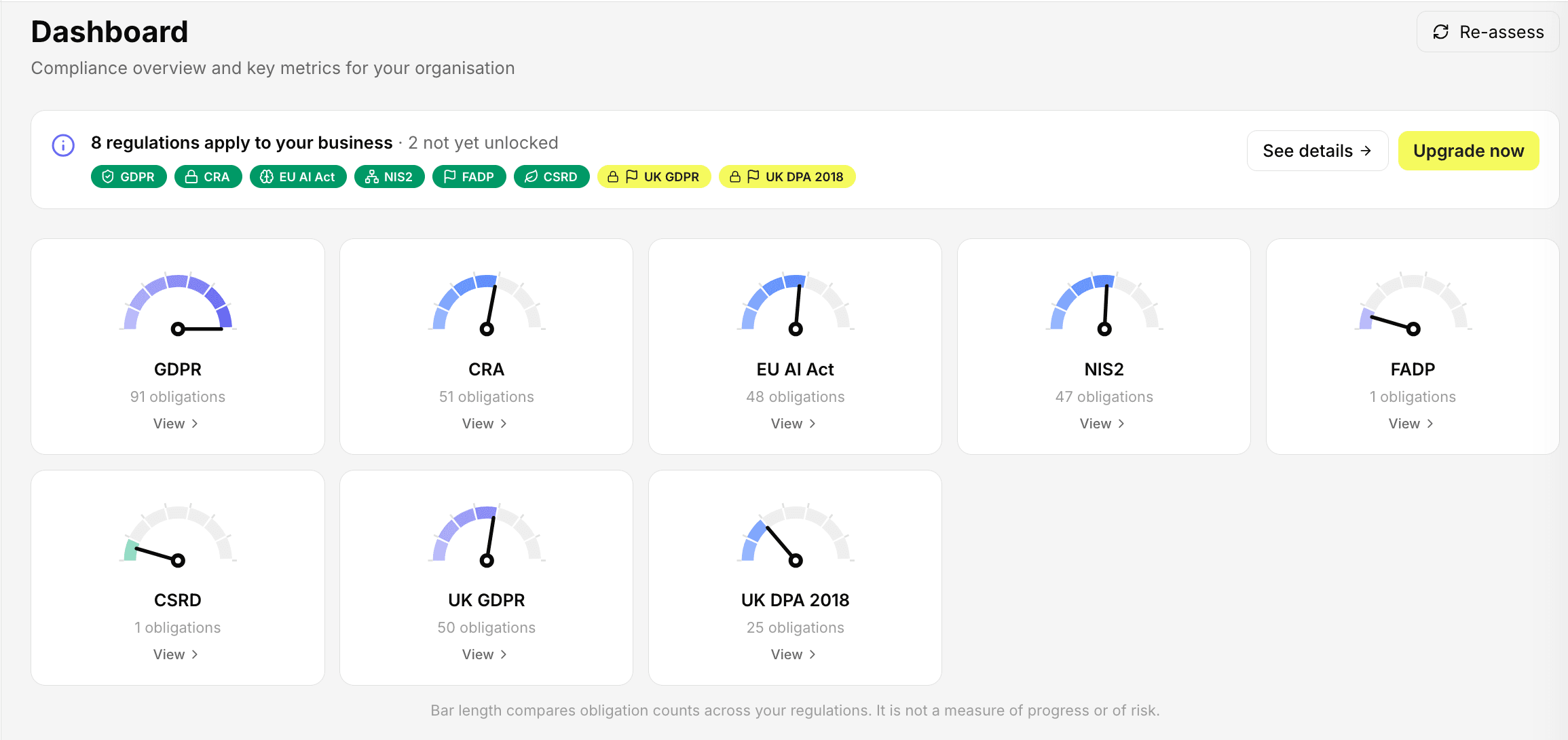
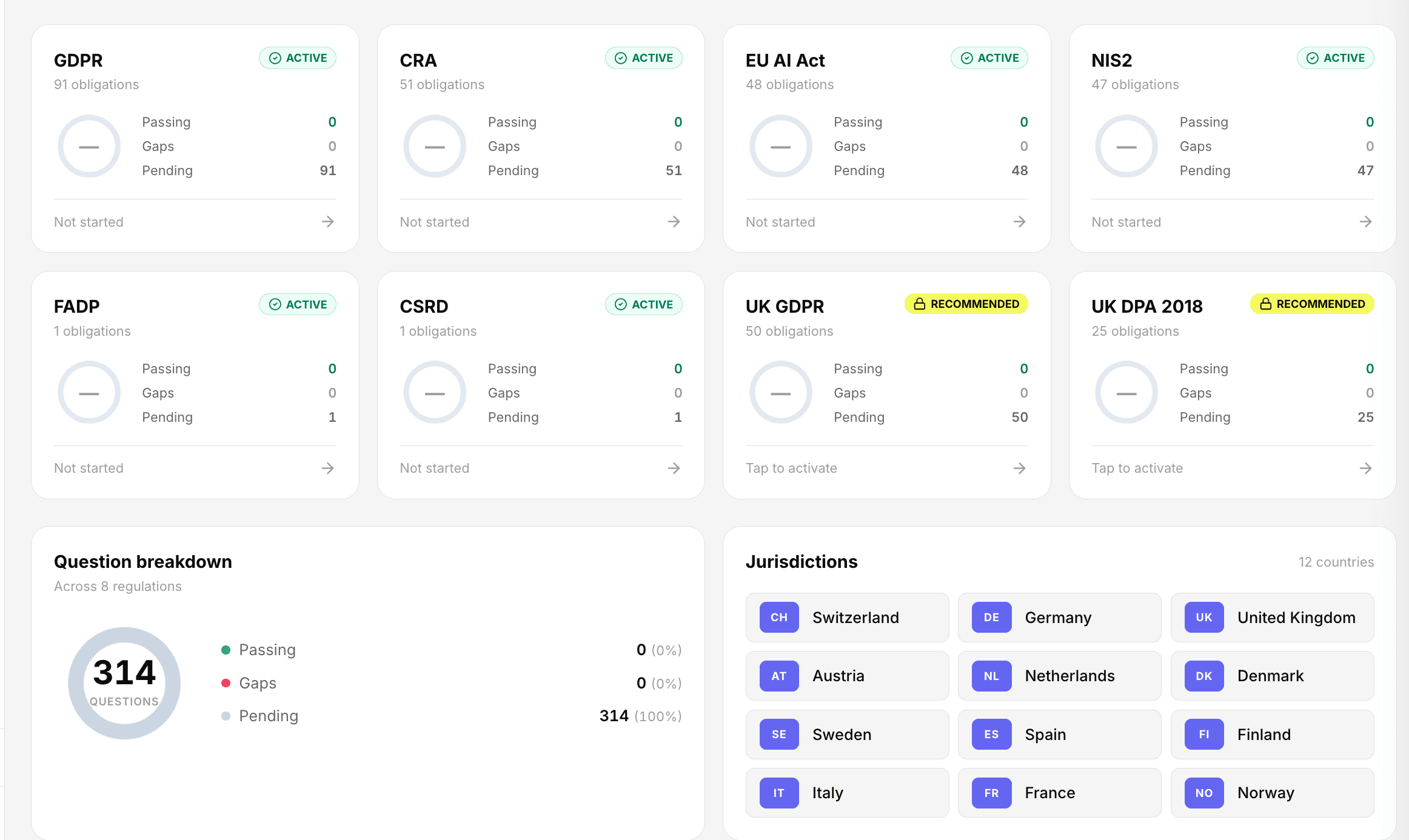
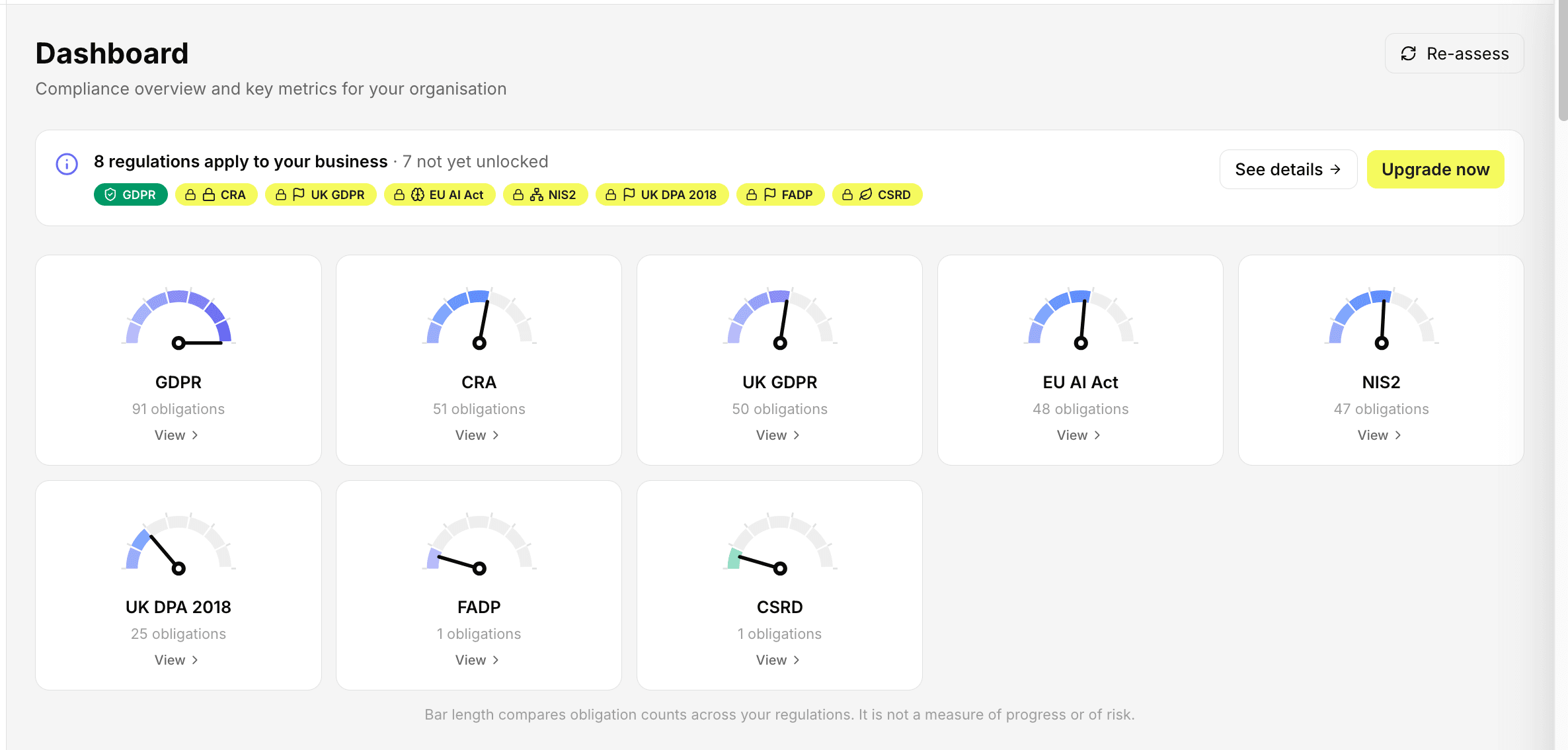
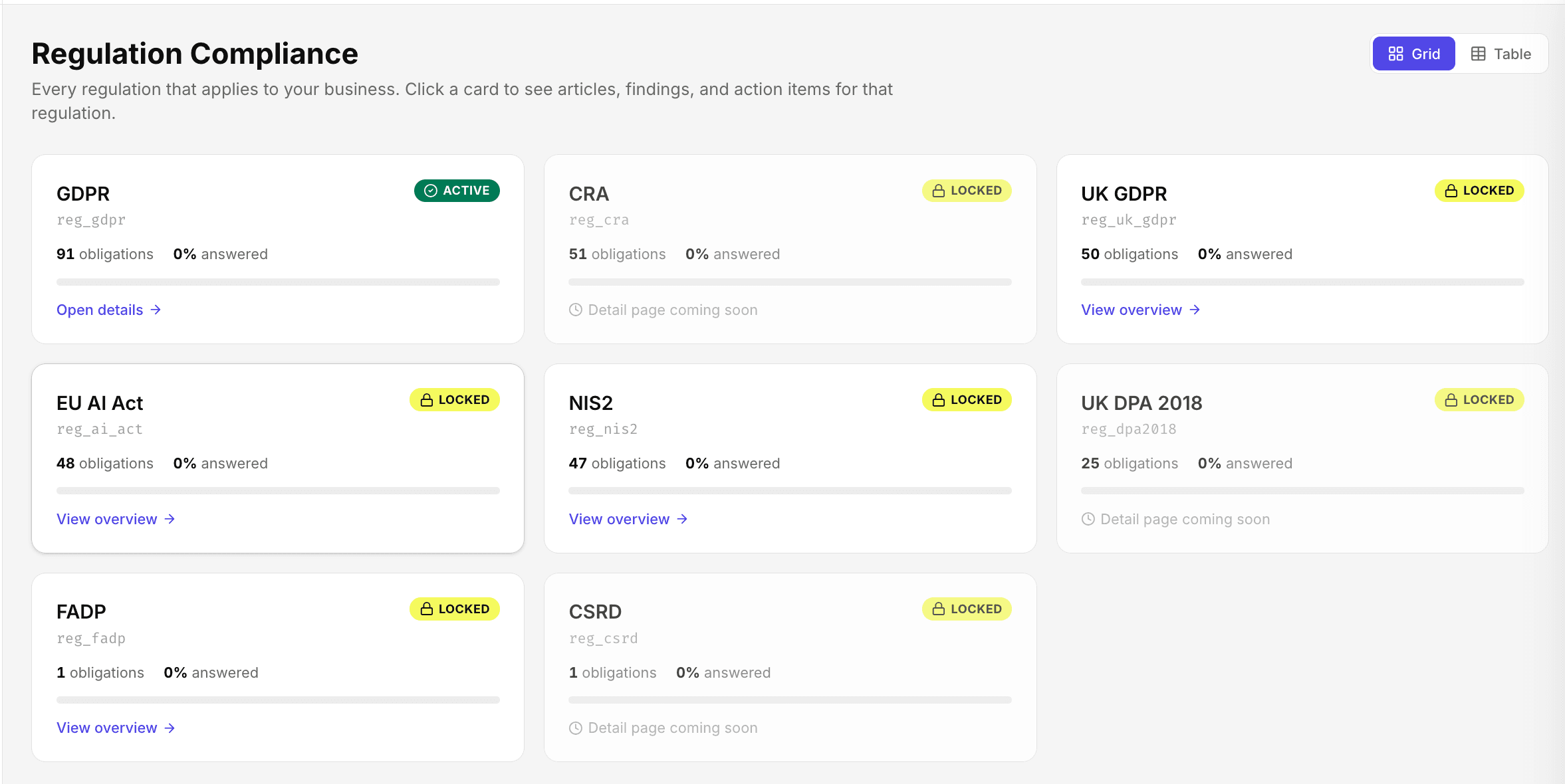
Why accounting firms cannot rely on vendor compliance alone
Bookkeeping data, payroll records, supplier invoices and bank-feed integrations all contain personal data — and the firm processing them is a controller under GDPR and FADP, not just a passive intermediary. As enterprise clients add ESG and CSRD-driven supply-chain questionnaires, accounting firms increasingly need to demonstrate their own compliance posture, not just their software vendor's.
What's included in ComplyOne-Accounts
The regulations that matter most for accounting firms, erp users and bookkeeping services — covered, mapped to your business, and tracked over time.
GDPR
Client data, supplier records and contact databases create controller obligations — privacy notices, retention, lawful basis, subject access requests.
Swiss FADP
Bookkeeping for Swiss-resident clients triggers FADP obligations regardless of where your firm is based — including the 250 000 CHF personal liability for non-compliance.
CSRD
Supply-chain sustainability data flows through accounting systems. Large clients increasingly demand structured ESG inputs from their bookkeepers.
AML
Customer due diligence, suspicious-transaction reporting and beneficial-owner registers — applies to accountants offering company formation, trust or fiduciary services.
How ComplyOne-Accounts works
Onboard in minutes
Quick signup, then 5 questions about your business — sector, locations, data flows. No credit card required.
Get your compliance map
See exactly which regulations apply to your business, where the gaps are, and what severity each carries.
Act on it
A prioritised task list, document templates, and an evidence pack organised for audit — guided through to a defensible compliance baseline.
Daily regulatory horizon scanning
ComplyOne scans EU regulatory sources every day — directives, implementing acts, regulator guidance, enforcement notices. When something changes that affects your obligation map, you get a structured alert: what changed, why it applies to you, and what you need to do. No more discovering enforcement deadlines from a news headline.
How to approach accounting firms, erp users and bookkeeping services compliance
Map your role for every data flow
For each client engagement, identify whether you are the controller (own marketing, supplier list), joint controller (filing on the client's behalf) or processor (running their books on their instruction). The legal obligations differ for each.
Sign DPAs with every software and bank-feed vendor
Bexio, Xero, payroll integrations, banking aggregators, document scanners — every vendor that touches client personal data needs a GDPR Article 28 / FADP Article 9 contract. Missing DPAs are the most common audit finding.
Define retention and destruction rules
Tax law requires retention; GDPR/FADP require deletion. Reconcile the two by jurisdiction and data type. ComplyOne tracks the per-data-type retention schedule and surfaces destruction tasks when the legal basis expires.
Prepare for client ESG questionnaires
Large enterprise clients increasingly request supplier-side ESG data driven by CSRD. As their bookkeeper, you sit closer to that data than anyone else — and the ability to respond credibly is a commercial differentiator.
Document AML procedures if applicable
Accounting firms providing company formation, trust services or fiduciary duties are obliged entities under AML rules. Customer due diligence files, beneficial-owner checks and suspicious-transaction reporting all require documented processes — not ad-hoc judgement.
Swiss-hosted
All data hosted in Switzerland — outside US data-access frameworks.
9 EU regulations
GDPR, AI Act, NIS2, DORA, FADP, UK GDPR, Data Act, CSRD, AMLR — one platform.
Daily horizon scanning
Regulatory changes alerted, mapped to your obligations, every day.
Designed for Bexio users and accounting firms — covers the full compliance stack behind your accounting data, not just the software you record it in.
Frequently asked questions
We use Bexio. Doesn't that handle compliance for us?+
Bexio handles the security and compliance of its own platform. Your firm remains the controller for the personal data you process in Bexio — privacy notices, retention rules, DPAs with sub-processors, and your response to a data subject request are all your responsibility, not Bexio's. ComplyOne fills the controller-side gap.
Are accountants subject to AML rules?+
It depends on the services offered. Standard bookkeeping and tax filing typically are not. Company formation, trust services, fiduciary duties, and acting as a registered office are obliged-entity activities under AML directives — and the firm needs documented customer due diligence, beneficial-owner verification, and suspicious-transaction reporting procedures.
How does CSRD affect a small accounting firm?+
Indirectly but increasingly. SMBs are not directly in CSRD scope, but their large clients are. Those clients ask their accountants for structured supply-chain data — Scope 3 emissions, supplier diversity, payment timeliness — to populate their own CSRD reports. Firms that can answer well will win and retain commercial clients; firms that cannot are at risk.
What about Swiss FADP for our cross-border clients?+
If you bookkeep for any Swiss resident or Swiss-based business, FADP applies regardless of where your firm sits. FADP creates personal liability up to CHF 250 000 for senior decision-makers and has its own breach reporting framework — distinct from GDPR. Treating GDPR alone as sufficient is a frequent oversight.
How quickly can our firm get up and running?+
The compliance check takes about 5 minutes per practice. From there ComplyOne builds your obligation map, generates your privacy notice, and produces a prioritised task list. Most firms reach a defensible compliance baseline within two working weeks.
See where you stand — in 60 seconds
Free compliance check, just 5 quick questions. No credit card required — get your obligation map and gap report.