Data centre & sustainability compliance
Energy reporting is no longer optional. Your data centre needs a compliance plan.
EED reporting, EnEfG efficiency thresholds, CSRD sustainability disclosures and EU Taxonomy alignment now apply to data centres. ComplyOne maps every applicable metric to your facility — PUE, WUE, ERF, REF — and tracks the regulatory deadlines that matter.
Just 5 quick questions — no credit card required.
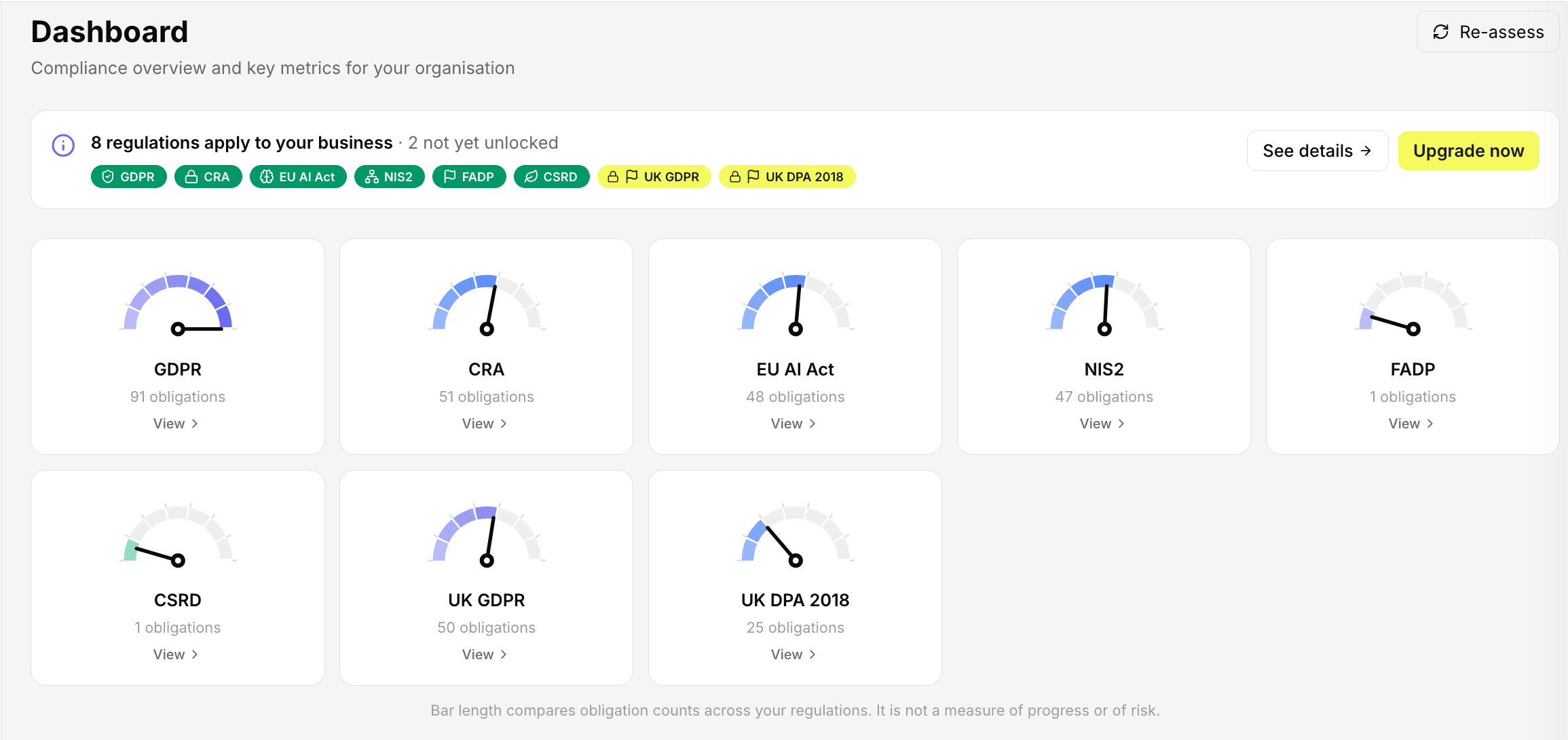
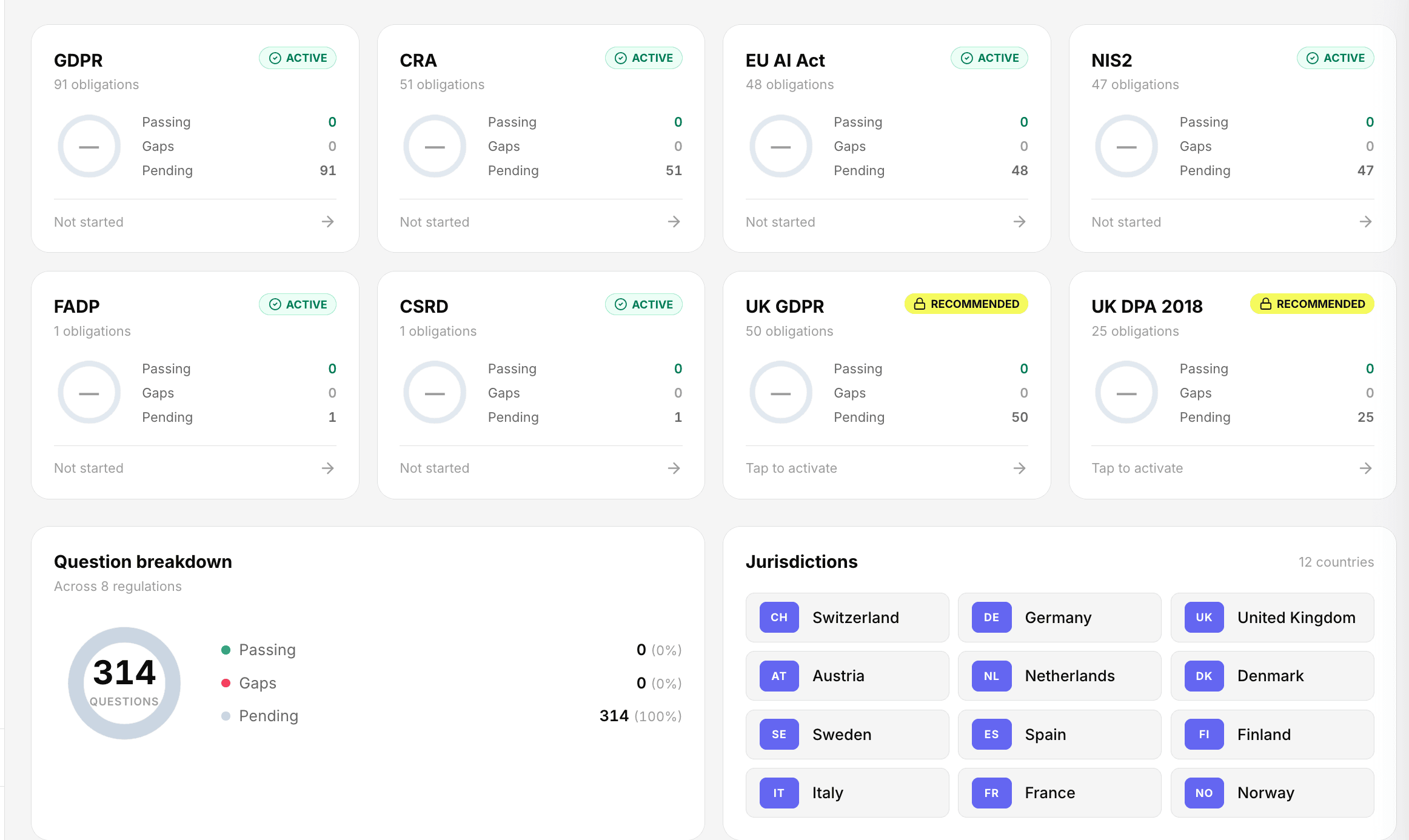
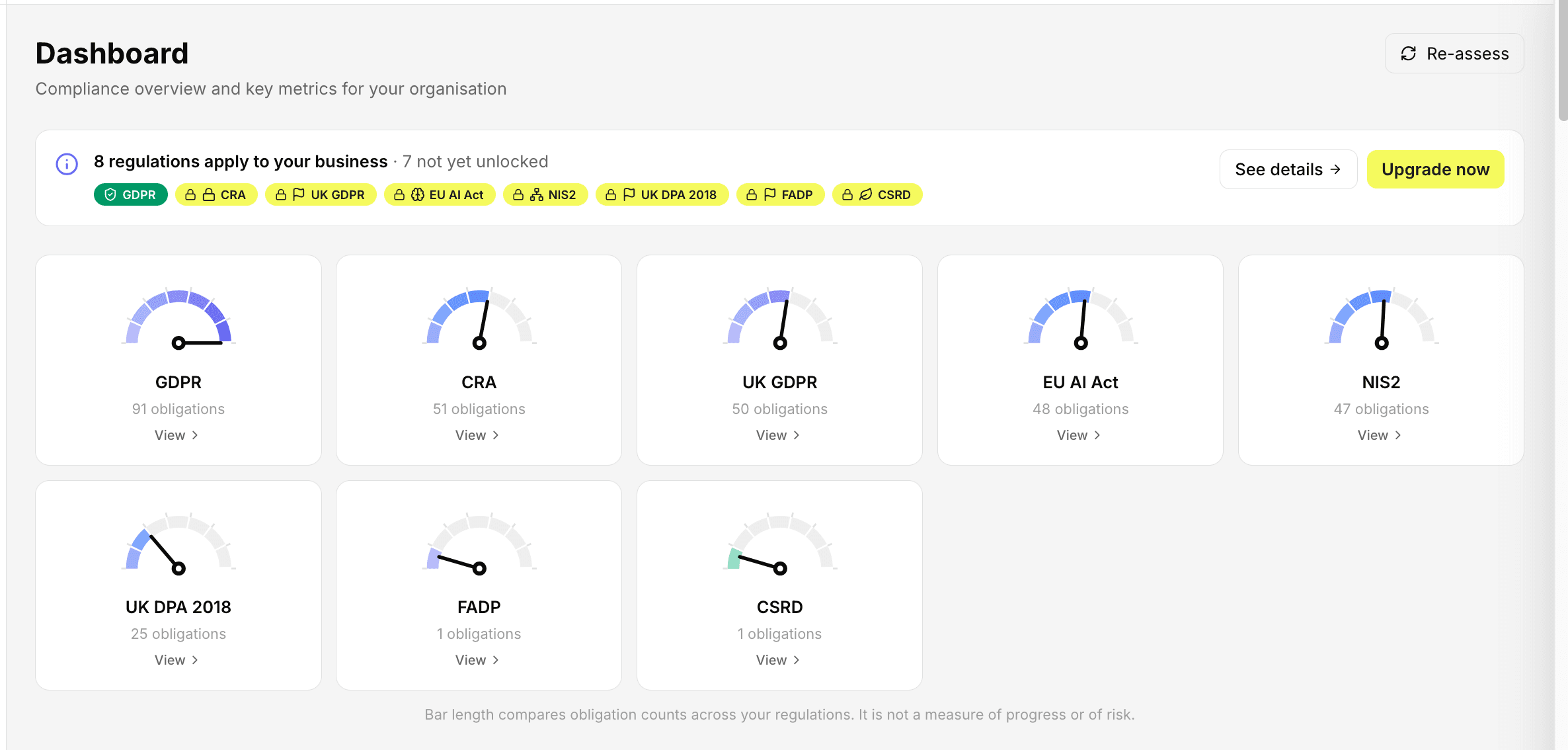
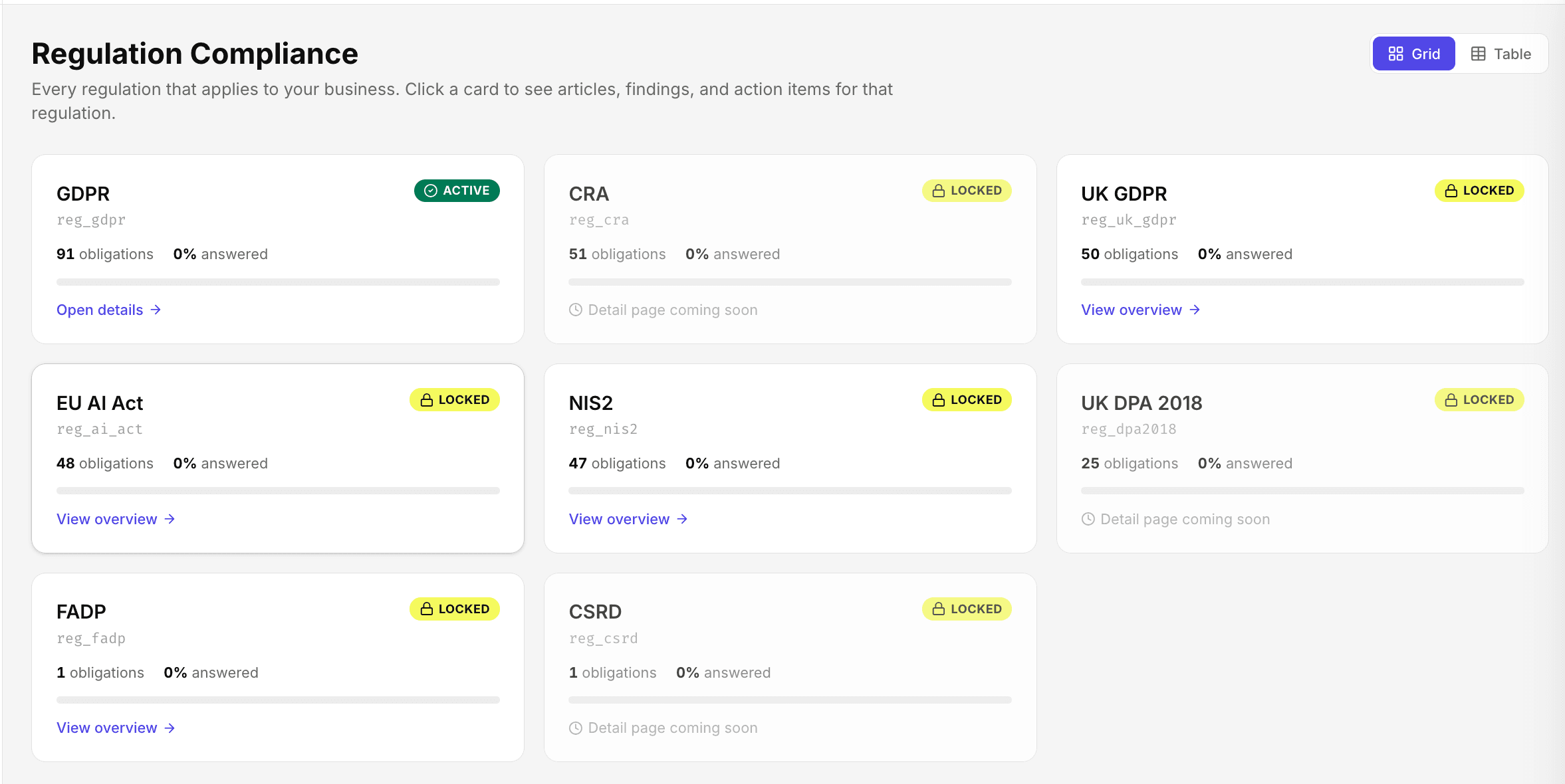
Why data centre sustainability compliance now applies to you
Data centres above 500 kW IT load report under the EU Energy Efficiency Directive. Sites in Germany face EnEfG efficiency thresholds (PUE ≤ 1.5 for existing facilities by July 2027, ≤ 1.3 by 2030). Operators in CSRD scope must disclose energy use, water use, waste-heat recovery and renewable share. EU Taxonomy alignment is increasingly demanded by lenders and customers. Spreadsheet tracking will not survive an audit.
What's included in ComplyOne-DataCentre
The regulations that matter most for data centre operators, colocation providers and hyperscalers — covered, mapped to your business, and tracked over time.
EED
EU Energy Efficiency Directive — annual reporting of energy use, IT load, PUE, WUE, waste heat recovery, renewable energy share. Applies to data centres above 500 kW IT load.
EnEfG
Germany's Energieeffizienzgesetz (EnEfG) — PUE thresholds for existing facilities (≤ 1.5 by July 2027, ≤ 1.3 by 2030), waste-heat reuse requirements (≥ 10% for new DCs from July 2026, rising to 15% by July 2027 and 20% by July 2028), renewable energy targets.
CSRD
Sustainability disclosure for in-scope operators. Scope 1, 2 and 3 emissions; energy and water use; waste-heat recovery; alignment with limiting global warming to 1.5°C.
EU Taxonomy
Climate change mitigation alignment criteria for data centres. Increasingly demanded by lenders, infrastructure investors and large customers driving capital allocation.
How ComplyOne-DataCentre works
Onboard in minutes
Quick signup, then 5 questions about your business — sector, locations, data flows. No credit card required.
Get your compliance map
See exactly which regulations apply to your business, where the gaps are, and what severity each carries.
Act on it
A prioritised task list, document templates, and an evidence pack organised for audit — guided through to a defensible compliance baseline.
Daily regulatory horizon scanning
ComplyOne scans EU regulatory sources every day — directives, implementing acts, regulator guidance, enforcement notices. When something changes that affects your obligation map, you get a structured alert: what changed, why it applies to you, and what you need to do. No more discovering enforcement deadlines from a news headline.
How to approach data centre operators, colocation providers and hyperscalers compliance
Inventory every metered feed and IT load
EED, EnEfG and CSRD reporting all build on the same primary data: total facility energy, IT energy, water consumption, waste-heat recovered, renewable energy procured. Without a documented metering inventory and methodology, every downstream KPI is contestable.
Calculate and trend the core efficiency KPIs
PUE, WUE, ERF (Energy Reuse Factor), REF (Renewable Energy Factor) — calculated to the EED methodology, trended over time. EnEfG specifies thresholds; CSRD requires disclosure; EU Taxonomy uses similar metrics for alignment scoring. Build the calculation once, reuse across all four regimes.
Document the regulatory thresholds that apply to your sites
EnEfG PUE ≤ 1.5 for existing DCs by July 2027 and ≤ 1.3 by 2030. Waste-heat reuse for new DCs: ≥ 10% from July 2026, ≥ 15% from July 2027, ≥ 20% from July 2028. EED reporting due annually. Each site needs its applicable thresholds documented with the deadline and the current gap-to-target.
Build the audit pack — methodology, data, evidence
Auditors will ask: where does the energy data come from, how is it metered, what is the calculation methodology, who signed off the KPIs. Maintain a continuous evidence pack — meter records, calculation spreadsheets, sign-offs, year-on-year trends — rather than scrambling at filing time.
Track regulatory updates and customer questionnaires
EED implementing acts evolve. EnEfG thresholds tighten in stages. CSRD ESRS standards iterate. Large customer ESG questionnaires evolve quarterly. ComplyOne structures customer-questionnaire responses so the same data set answers every request.
Swiss-hosted
All data hosted in Switzerland — outside US data-access frameworks.
9 EU regulations
GDPR, AI Act, NIS2, DORA, FADP, UK GDPR, Data Act, CSRD, AMLR — one platform.
Daily horizon scanning
Regulatory changes alerted, mapped to your obligations, every day.
Frequently asked questions
Does EED reporting apply to my data centre?+
EED applies to data centres with installed IT power demand of 500 kW or more. Below that threshold, direct EED reporting is not required, but customer ESG questionnaires and EU Taxonomy assessments increasingly request the same data set regardless. Most operators above 100 kW already need to track these KPIs to win and retain enterprise customers.
What PUE do we need to hit, and when?+
Under Germany's EnEfG, existing data centres must reach PUE ≤ 1.5 by 1 July 2027 and ≤ 1.3 by 1 July 2030. New facilities (built after the act came into force) must hit ≤ 1.2 from the start. Waste-heat reuse for new builds is staged: at least 10% from July 2026, 15% from July 2027, and 20% from July 2028. Other EU member states are introducing their own implementations — ComplyOne tracks the per-jurisdiction thresholds.
Are we required to recover waste heat?+
Under EnEfG, new data centres in Germany must achieve waste-heat reuse of at least 10% from July 2026, 15% from July 2027, and 20% from July 2028 (Energy Reuse Factor, DIN EN 50600-4-6). Existing facilities have separate retrofit requirements depending on size and grid context. The EED and CSRD encourage waste-heat recovery as a sustainability-aligned activity even where not strictly mandated.
How does CSRD apply to a data centre operator?+
Direct CSRD obligations apply to operators meeting the size thresholds (large undertakings, listed SMEs from 2026). Operators outside direct scope still face indirect obligations — large customers (cloud hyperscalers, financial services tenants, in-scope colocation customers) require Scope 3 emissions data, energy KPIs and EU Taxonomy alignment data from their data centre suppliers to complete their own CSRD reports.
What is EU Taxonomy alignment for a data centre?+
The EU Taxonomy defines technical screening criteria for data centres under the climate-change-mitigation objective: PUE thresholds, waste-heat recovery, refrigerant ozone-depletion potential, energy management systems, and renewable energy procurement. Alignment is increasingly demanded by lenders and infrastructure investors; non-aligned facilities face higher capital costs.
How quickly can a data centre operator get up and running?+
The compliance check takes about 5 minutes per site and produces your applicable-regulations map immediately. Most operators reach a defensible reporting baseline within 2 to 4 weeks once metering data is available — ComplyOne provides the calculation engine, the regulatory thresholds and the audit-pack structure. Operators with mature DCIM data can typically reach baseline within a working week.
Cyber compliance packs
For data centre operators in scope of NIS2 and other EU cyber rules.
Cyber Entity
For the directly regulated entity — banks, insurers, NIS2 entities, data centre operators. CRA scope mapping is included; running CRA per product is CRA Operations, sold separately.
- NIS2 and DORA obligation scope
- CRA scope mapping — whether CRA applies to you
- Data centre facility metrics (PUE, WUE, ERF, REF)
- Incident-reporting deadline reference
- Resilience-testing management
See where you stand — in 60 seconds
Free compliance check, just 5 quick questions. No credit card required — get your obligation map and gap report.